What Is FF&E? A Sourcing Guide for Hotel and Office Buyers
FF&E is one of those acronyms that appears in every hotel and commercial fit-out document — budgets, tender lists, punch lists — and is explained in almost none of them. If you are new to property development, hospitality procurement or corporate fit-out, this guide will give you the working definition, the boundaries with adjacent categories, and the sourcing process that actually determines whether the furniture arrives complete, compliant and on budget.
FF&E defined: furniture, fixtures and equipment
FF&E stands for Furniture, Fixtures & Equipment — the movable items that furnish a building but are not permanently attached to it. The category exists because these items behave differently from construction: they are purchased later, specified by designers rather than engineers, depreciated over shorter cycles, and replaced without a contractor.
In practice, FF&E covers:
- Furniture: beds, sofas, armchairs, desks, chairs, tables, case goods, outdoor furniture
- Fixtures: lighting attached to ceilings and walls, bathroom accessories, artwork, mirrors, signage elements
- Equipment: in-room safes, minibars, televisions and mounts, kitchen small-wares, gym equipment (definitions vary by project)
What it excludes is equally important: carpets and hard flooring, wall finishes, ceilings and mechanical systems are construction. Where a project draws the line — particularly for window treatments and decorative lighting — is set in the FF&E specification document, not by dictionary definition.
FF&E vs. OS&E: the distinction that trips up budgets
OS&E (Operating Supplies & Equipment) is the consumable side of hospitality: bed linen and towels, tableware, glassware, guest amenities, stationery, uniforms, cleaning equipment. The practical differences:
| FF&E | OS&E | |
|---|---|---|
| Lifespan | 7–15 years (capital budget) | 1–3 years (operating budget) |
| Specified by | Interior designer / architect | Operator (brand standards) |
| Budget share | Commonly cited at roughly 5–15 % of total project cost, depending on segment | Small capital line, then ongoing operating cost |
| Example | 200 guestroom bed frames and mattresses | 600 sets of sheets for those beds |
The budget consequence: FF&E is usually committed before the OS&E budget is fully understood, and late FF&E overruns are paid for out of OS&E — which then shows up as thin amenities and slow linen replacement in year one. Tender FF&E and OS&E together where possible.
The FF&E procurement cycle, stage by stage
Stage 1 — Programming and budget
Room count, room mix, F&B outlets, meeting space and back-of-house drive the FF&E schedule. At this stage the budget per key (a standard metric: total FF&E cost divided by room count) is set. Segment benchmarks vary widely — a select-service property and a luxury resort are different projects — so the number must come from the project’s own pro forma, not from a generic table.
Stage 2 — Specification
The designer produces the FF&E specification: every item, finish, fabric, dimension and performance requirement. For imported items, this is where compliance requirements should be locked — fire performance, weight ratings, sustainability certifications — because they determine which factories can bid at all. A specification that omits compliance invites quotes from suppliers who cannot deliver it.
Stage 3 — Procurement and tendering
Bids are solicited against the specification. Direct factories, distributors and dealers all price the same schedule; the spread comes from margin layers, not manufacturing cost. This is the stage where a specification’s ambiguities surface as exclusions — freight, installation, warehousing and replacement stock are the four most common.
Stage 4 — Sampling and mock-up rooms
Approved samples — fabric, finish, one complete chair or headboard — precede production. Mock-up guestrooms validate the whole package before hundreds of units are cut. Treat sample approval as a contractual gate: everything after it is production against an approved standard.
Stage 5 — Production and quality control
Manufacturing runs 30–60 days for imported case goods and upholstery, in parallel with the construction schedule. Pre-shipment inspection (or third-party QC at the factory) is the buyer’s last look before the goods leave Asia; it is cheap relative to replacing 400 chairs after installation.
Stage 6 — Logistics, installation and closeout
Freight, customs, delivery-to-site sequencing, installation and the FF&E closeout package: warranties, spare parts, attic stock and the as-built inventory. Projects that skip closeout pay for it in year three, when a discontinued chair model cannot be matched.
Four routes to buy FF&E — and what each costs you
Procurement teams rarely choose between “factory” and “not factory” in the abstract. The real choice is between four routes, and the right one differs by category:
| Route | Best for | Trade-off |
|---|---|---|
| Direct factory | Upholstery, seating, case goods at volume; customisation; tight lead times | You own the specification, QC and logistics coordination |
| Distributor / wholesaler | Small quantities, stock items, quick replenishment | Higher unit cost; limited customisation; stock dictates the catalogue |
| Dealer / interior contractor | Design-led projects, single point of responsibility, installation included | Highest landed cost; you pay for project management you may already have |
| FF&E procurement agent | Multi-supplier programmes needing local presence, warehousing and installation management | Agent fee (commonly a percentage of spend); quality depends on the agent’s factory bench |
Most projects end up with a blend: designer-led specialties through dealers, volume upholstery and case goods direct from factories, and a procurement agent holding the schedule together. The expensive mistake is putting volume categories through the highest-margin route by default.
Where a direct factory fits
Most FF&E schedules are split across dozens of suppliers: an Italian sofa brand, a Turkish chair maker, a Chinese case-goods manufacturer, a local lighting house. Coordinating twenty delivery windows into one installation sequence is a project-management exercise that consumes the procurement team for months.
Consolidating categories with a single manufacturing group compresses that risk. We supply guestroom and public-area furniture — sofa beds, armchairs, office and meeting-room seating, desks and case goods — from three factories in the Shanghai region: Songjiang for panel and desk systems (25,000 m²), Jiashan for upholstery and seating (120,000 m²) and Nantong for solid-wood pieces (45,000 m²). One specification, one production schedule, one container plan, one QC standard — and one point of accountability when something needs fixing.
That does not mean one factory should make everything. Lighting, art and complex engineered equipment usually stay with specialists. The consolidation case is strongest for upholstered items and case goods, where volume, freight efficiency and consistent finishing matter most.
Five questions to ask any FF&E supplier
- What compliance reports come with the goods? Fire performance, weight ratings and sustainability certificates should be named in the quotation, with lab and model numbers — not promised “on request”.
- What is excluded from your price? Freight, insurance, installation, warehousing and replacement stock are the usual exclusions. Ask for a delivered-and-installed number, then compare like with like.
- What is the real lead time from approved sample? Add sea freight and customs to the factory’s production time before comparing to your opening date.
- What happens to spare parts in year five? Get the parts list and price list with the quotation. Discontinued components are the most common long-term failure in FF&E.
- Can you load a mixed container? A supplier who plans freight per item is adding cost per unit. Mixed-container loading across your whole schedule can cut landed cost per unit substantially.
Next step
If you are building an FF&E schedule and want manufacturing pricing with a loading plan, send us the item list and quantities. We return a quotation, compliance documentation and a container plan — see our sofa beds, office chairs and office furniture ranges, or request a quotation.
Frequently asked questions
What does FF&E stand for?
Furniture, Fixtures & Equipment — the movable contents of a building, purchased on a capital budget and replaced on a 7–15 year cycle.
What is the difference between FF&E and OS&E?
FF&E is the durable furnishing (furniture, lighting, in-room equipment); OS&E is the consumable operating supply (linen, tableware, amenities). They sit in different budget lines and are specified by different people.
How much of a hotel project budget is FF&E?
Industry rules of thumb commonly place FF&E in the range of roughly 5–15 % of total project cost, varying widely by segment and market. The reliable number is the one in your own pro forma.
Who is responsible for the FF&E specification?
Usually the interior designer or architect, within the operator’s brand standards; the owner or procurement team owns budget and tender execution.
Can one factory supply a whole hotel’s FF&E?
Rarely the entire schedule — lighting and art usually stay with specialists — but furniture categories (upholstery, seating, case goods) can usually be consolidated with one manufacturing group, which simplifies QC, freight and installation.
About the author: Shanghai Yaju Furniture Co., Ltd. manufactures contract sofas, sofa beds, office chairs and desk systems across three factories in Shanghai, Jiashan and Nantong, exporting to the US, Europe, the Middle East and Southeast Asia. Contact: David (Client Marketing Manager), David@yajufurniture.com.
From our production floor
Related YAJU products
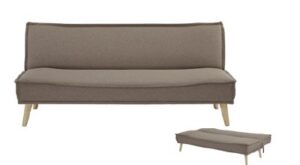 Sofa Beds
Sofa Bed LAB-174N29S-P3
View model →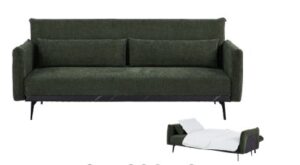 Sofa Beds
Sofa Bed 5LAF-181N32S-P3
View model →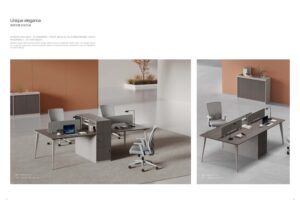 Office Furniture
Four-person Workstation TLW-5129
View model →
Browse the full range on the YAJU products page — or request a quotation.