Sofa Bed MOQ and Lead Time: What Importers Should Budget For
Two numbers decide whether a furniture import programme succeeds: the minimum order quantity (MOQ) you can actually place, and the total time from purchase order to delivery at your door. Get either wrong and the maths stops working — the unit price climbs, or the stock arrives after the selling season.
This article explains how factories set MOQs, what realistic timelines look like end to end, and how to plan the calendar so the container arrives when you need it. The figures below are the planning ranges we work with; your quotation will have the binding numbers for your specific models.
Why MOQs exist — and what actually drives them
MOQ is not an arbitrary barrier. It comes from four real cost structures:
- Frame set-up and tooling. Cutting jigs, foam moulds and sewing patterns are configured per model. Below a certain quantity, the set-up cost per unit becomes the dominant line in the price.
- Material minimums. Fabric mills sell in roll minimums (commonly 300–1,000 m depending on the mill); foam is cut from standard blocks; hardware and mechanisms come in case quantities. A 10-unit order often still buys a full roll of fabric.
- Container economics. An order that cannot fill a shared container pays freight as if it were full. Factories price accordingly.
- QC and documentation overhead. Every order needs inspection, compliance paperwork and shipping documents regardless of size.
Typical MOQ ranges by product type
These are the ranges we quote against for direct factory orders, with mixed colours and fabrics allowed inside one model:
| Product | Typical MOQ (per model) | Notes |
|---|---|---|
| Sofa beds (2–3 seater) | 20–50 units | Mixed colours usually accepted; custom fabric adds material minimums |
| Armchairs / accent chairs | 30–60 units | Same frame, different fabric often counts as one model |
| Office chairs (task / visitor) | 50–100 units | Mechanism and castor case quantities drive the floor |
| Desks and desk systems | 30–60 units | Panel cut sizes favour full-container quantities |
| Fully custom / OEM models | 100+ units | New tooling amortised over the run |
Below these ranges, prices rise steeply — and for a reason: a 15-unit sofa bed order consumes the same factory hours as a 50-unit order. If your programme is genuinely smaller, the better routes are a distributor’s stock programme or a consolidated mixed order across models (one container, several products, each above its own MOQ).
The real timeline: PO to doorstep
Here is the calendar we plan against, stage by stage. The assumption is an existing (non-custom) model with your chosen fabric or finish:
| Stage | Duration | What happens |
|---|---|---|
| Quotation & spec confirmation | 3–7 days | Pricing, compliance documents, loading plan agreed |
| Sample production | 10–20 days | One complete unit in your fabric/finish for approval |
| Sample revision (if needed) | 5–10 days per round | Budget one round; specify everything at sample stage |
| Production | 30–45 days | Starts after sample approval + deposit; 35–50 days for complex upholstery |
| Pre-shipment QC | 2–3 days | In-house or third-party inspection before loading |
| Sea freight | 18–40 days | Destination-dependent (see below) |
| Customs & delivery | 5–15 days | Depends on destination efficiency and Incoterms |
Realistic door-to-door: 10–14 weeks for a smooth FOB programme from approved sample to your warehouse. For fully custom models with new tooling, add 3–4 weeks for development before production starts.
Sea freight windows from Shanghai
Planning ranges for port-to-port transit:
- US West Coast (LA/Long Beach): ~14–18 days
- US East Coast (via Panama or all-water): ~25–38 days
- Northern Europe (Rotterdam/Hamburg): ~30–38 days
- Mediterranean: ~28–35 days
- Middle East (Jebel Ali/Dammam): ~16–25 days
- Southeast Asia: ~5–14 days
Add the usual port congestion and customs variability on top. During peak season (August–October, ahead of the Chinese New Year), both factory slots and freight space tighten — the same weeks everyone wants to ship.
Incoterms: who pays for what, and where risk transfers
The Incoterm in your quotation is not a footnote — it allocates cost and risk, and it changes what your “lead time” actually includes:
| Incoterm | Factory handles | You handle | Lead-time implication |
|---|---|---|---|
| EXW (ex works) | Goods ready at factory gate | Everything: pickup, export, freight, insurance, import | Shortest factory commitment; you carry the schedule |
| FOB (port of shipment) | Inland transport, export clearance, loading | Ocean freight, insurance, import, delivery | The standard B2B baseline; factory’s responsibility ends at the rail |
| CIF (named port) | FOB + ocean freight + marine insurance | Import customs, duties, delivery to site | Simpler budgeting; you lose some freight control |
| DDP (delivered, duty paid) | Everything to your door, duties included | Unloading only | Longest total lead time; highest certainty of landed cost |
Two practical points. First, insurance: under FOB you control the policy — make sure it covers the full CIF value plus the expected profit margin, not just invoice value. Second, DDP quotes look attractive on price but require the supplier (or their agent) to be the importer of record in your country; for large programmes this is worth structuring deliberately rather than accepting by default.
How to build a calendar that works
Work backwards from the date goods must be sellable or installable, not forwards from when the idea arrives:
- Fix the on-site date. A store opening, a hotel soft opening, a promotion start.
- Subtract the door-to-door estimate (use the upper end of each range, not the middle).
- Subtract production and sampling. If your date is fixed and tight, the sample stage is where you compress — approve from a detailed spec sheet and photos rather than waiting for a physical sample, accepting the risk.
- Set the PO date. Then hold it. Late POs are the single most common cause of missed delivery dates.
Two seasonal traps to plan around: the Chinese New Year shutdown (typically 2–4 weeks in January or February, with production ramping down a week or two before) and the pre-CNY freight rush in autumn. A PO signed in late November for a March delivery is a schedule built on hope.
What importers can negotiate besides price
When MOQ is the blocker, these levers often unlock a programme without moving the unit price:
- Consolidate models into one container. Three products at 30 units each often price better than one product at 30.
- Accept mixed colours. Most factories run one model in several colourways without penalty — useful for retail assortments.
- Use stock fabrics and finishes. Catalogue materials avoid mill minimums and shorten sampling.
- Plan a two-phase programme. Phase one at MOQ to test the market; phase two with a scheduled production slot once sell-through data exists.
- Ask for tiered pricing. Volume tiers at 50 / 100 / 200 units are standard; knowing them lets you size the first order intelligently.
Next step
Tell us your target quantity and delivery date — we will tell you honestly whether it is achievable and what the options are. Browse sofa beds, office chairs or request a quotation with your quantities.
Frequently asked questions
What is the typical MOQ for sofa beds from a Chinese factory?
Commonly 20–50 units per model for direct factory orders, with mixed colours usually accepted. Fully custom models with new tooling typically start at 100+ units.
How long does sofa bed production take?
30–45 days after sample approval and deposit for standard models; 35–50 days for complex upholstery or large quantities. Add 10–20 days for sampling beforehand.
What is the total lead time from order to delivery?
Plan on 10–14 weeks door-to-door for a standard FOB programme, including sampling, production, sea freight and customs. Custom tooling adds 3–4 weeks.
Can I order a smaller quantity for a trial?
Below MOQ the unit price rises steeply. A mixed container across several models, or a distributor stock programme, is usually more economical than a small single-model order.
When is the worst time to place an order?
Late November to January, ahead of Chinese New Year: factory capacity and freight space both contract. For a spring delivery, place the PO by October.
About the author: Shanghai Yaju Furniture Co., Ltd. manufactures contract sofas, sofa beds, office chairs and desk systems across three factories in Shanghai, Jiashan and Nantong, exporting to the US, Europe, the Middle East and Southeast Asia. Contact: David (Client Marketing Manager), David@yajufurniture.com.
From our production floor
Related YAJU products
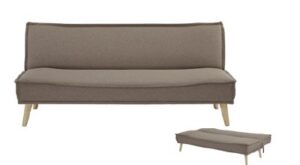 Sofa Beds
Sofa Bed LAB-174N29S-P3
View model →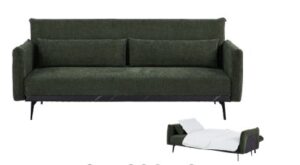 Sofa Beds
Sofa Bed 5LAF-181N32S-P3
View model →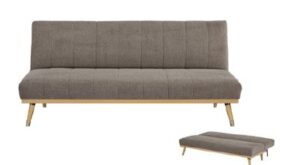 Sofa Beds
Sofa Bed LAB-174N17S-P3
View model →
Browse the full range on the YAJU products page — or request a quotation.