Sofa Bed Container Loading: A 20GP vs 40HQ Planning Guide for Importers
“How many sofa beds fit in a 40HQ?” is the question every first-time importer asks — and the one most often answered with a confident number that turns out to be wrong on the loading dock. The honest answer is a range, because it depends on whether your sofa beds ship flat-packed or assembled, how the cartons are dimensioned, and what else shares the container.
This guide explains how factories actually plan container loading, gives you the planning ranges we use when quoting, and shows why the loading plan is a cost decision, not just a logistics detail.
Start with the container, not the sofa
Two container types cover almost all furniture imports from Asia:
| 20GP (20′ general purpose) | 40HQ (40′ high cube) | |
|---|---|---|
| Internal length | ~5.90 m | ~12.03 m |
| Internal width | ~2.35 m | ~2.35 m |
| Internal height | ~2.39 m | ~2.69 m |
| Usable volume | ~33 CBM | ~76 CBM |
| Typical payload | ~28 t | ~26–29 t |
Two constraints decide every load: volume and weight. For upholstered furniture, volume almost always binds first — a full 40HQ of sofa beds is heavy, but well under the payload limit. For dense goods (solid wood, stone, metal frames), weight can bind first. A good loading plan tells you which constraint you are near, because the expensive mistake is a container that is “full” at 60 % of its weight capacity with air you already paid to ship.
Flat-pack vs. assembled: the single biggest lever
Assembled sofa beds ship with their volume largely empty: a 3-seater sofa bed occupies roughly 2.5–3.5 CBM assembled but only about 1.3–1.8 CBM flat-packed, once arms, back and base are separated and nested. That is often a 40 %+ saving in freight cost per unit — the difference between a container that pays for itself and one that ships air.
The trade-offs:
- Flat-pack needs assembly at destination — instructions, hardware packs, and ideally a brief assembly video. Budget labour locally; assembly of a flat-pack sofa bed is typically a 15–25 minute job for two people with the right tools.
- Flat-pack requires engineered packaging: corner protection, void fill, and moisture barriers for sea freight. Cutting packaging corners to save CBM turns into damage claims.
- Assembled makes sense for premium or complex pieces where assembly quality is part of the product promise, and where freight is a small share of landed cost.
For most B2B import programmes — especially mixed retail or hospitality programmes — flat-pack is the default, and the factory’s carton dimensions determine everything downstream.
Planning ranges we quote with
These are the planning ranges we use internally, based on typical flat-packed carton dimensions and 85–90 % packing efficiency (the rest is pallet bases, dunnage and door clearance). Treat them as a planning baseline — the binding number is the one in your quotation’s loading plan.
| Cargo (flat-packed) | ~CBM per unit | ~Units per 20GP | ~Units per 40HQ |
|---|---|---|---|
| 2-seater sofa bed | 1.0–1.3 | 20–28 | 48–65 |
| 3-seater sofa bed | 1.4–1.8 | 14–22 | 35–50 |
| Armchair / accent chair | 0.5–0.8 | 35–50 | 80–120 |
| Office chair (stacked/cartoned) | 0.25–0.4 | 70–110 | 160–260 |
| Desk / desk system (flat) | 0.4–0.7 | 40–65 | 95–150 |
Notice what the table implies for programme design: a 40HQ filled with 3-seater sofa beds is a very different business from the same container loaded with a mix of sofa beds, armchairs and desks. Mixed loading is normal and usually beneficial — it lets a full furniture programme ship as complete containers instead of half-empty ones, and it is the single most effective way to cut landed cost per unit.
Worked example: a 120-room hotel programme
A select-service hotel needs 120 guestroom sofa beds, 60 armchairs and 40 desks. Planning with the ranges above:
- 120 sofa beds × ~1.6 CBM ≈ 192 CBM → roughly 2.5–3 × 40HQ if shipped alone
- 60 armchairs × ~0.65 CBM ≈ 39 CBM
- 40 desks × ~0.55 CBM ≈ 22 CBM
Total ≈ 253 CBM. Loaded together and planned properly, that is about 3 × 40HQ instead of the 4+ containers a naive item-by-item calculation would produce — a saving of one full ocean freight plus destination charges per programme. This is why we ask for the whole item list before quoting, not one model at a time.
How to read a loading plan
A competent factory returns a loading plan with your quotation — not just a price per unit. It should show, at minimum: carton dimensions for each item, units per carton, cartons per container, total CBM, total gross weight, and the packing method. Here is how to sanity-check one in five minutes:
- Multiply and compare. Units per carton × cartons per container should reconcile with the quoted unit count. If it doesn’t, someone estimated rather than measured.
- Check CBM against the container. Total cargo CBM should be at most ~90 % of the container’s usable volume (33 CBM for 20GP, 76 CBM for 40HQ). A plan at 98 % is fiction; at 60 % you are paying to ship air.
- Check weight. Gross weight should stay comfortably under payload (~28 t for 20GP). For upholstery this is rarely binding — but a mixed load with solid wood or metal can hit the ceiling.
- Look at carton shape. Odd-shaped cartons waste volume. Sofa beds designed for nesting (back inside base, arms rotated) load dramatically better than generic rectangular boxes.
- Ask for photos. A factory that ships regularly has photos of loaded containers. If they cannot produce one, treat the loading plan as a guess.
ISPM 15 and wood packaging rules
If your order ships with solid-wood packaging, pallets or dunnage, it falls under ISPM 15: wood packaging must be heat-treated or fumigated and marked with the IPPC stamp. Most destinations enforce it — the EU, US, Australia and many others reject or destroy non-compliant pallets at the border. When quoting, confirm that packaging is ISPM 15-compliant; the marking is visible on the pallet stamp, so it is easy to verify on arrival.
Two related rules worth knowing:
- Solid wood furniture (not packaging) has its own requirements in some markets — the US requires treatment and marking for solid wood packing materials, and the EU’s deforestation regulation (EUDR) is phasing in due-diligence requirements for wood and leather supply chains. If your programme includes solid-wood case goods for the EU, ask your supplier how they document timber origin.
- Moisture is the quiet killer of container loads. Sea freight exposes cartons to weeks of humidity and temperature swings. Specify moisture-barrier cartons and silica desiccants for upholstered goods; a container of mould-stained sofa beds is a total loss, not a claim you want to argue.
What to ask your factory for
- A loading plan, not a piece count. Carton dimensions, units per container, and the packing method (stacked, nested, on pallets).
- Gross and net weights per item. Needed for both container weight planning and destination handling.
- Mixed-load optimisation across your whole order. One consolidated loading plan beats four itemised ones.
- Packaging specification. Carton grade, corner protection, moisture barrier, ISPM 15 for wood packaging.
- Photos of a loaded container for a previous similar order — a factory that loads properly will have them.
Next step
Send us your item list and quantities — we will return a container loading plan with carton dimensions, weights and a mixed-load optimisation. See our sofa bed range or request a quotation.
Frequently asked questions
How many sofa beds fit in a 40HQ container?
Flat-packed, typically 35–50 three-seaters or 48–65 two-seaters per 40HQ, depending on carton dimensions and packing efficiency. Assembled units fit far fewer — often less than half.
Is flat-pack shipping worth it?
For most import programmes, yes: it commonly cuts freight volume 30–45 % versus assembled shipping. The cost is assembly labour at destination, which is usually a fraction of the freight saving.
What is ISPM 15?
The international standard requiring wood packaging (pallets, crates, dunnage) to be heat-treated or fumigated and marked with an IPPC stamp. Non-compliant packaging can be rejected or destroyed at customs.
Can you mix sofa beds and office chairs in one container?
Yes — mixed loading is standard practice and usually reduces landed cost per unit significantly. We optimise the load across your entire order rather than item by item.
How do you protect furniture from moisture in sea freight?
Moisture-barrier lined cartons, silica desiccants and proper pallet bases. For long transits or storm-season sailings we recommend upgrading the packaging specification — it is cheap insurance against a total container loss.
About the author: Shanghai Yaju Furniture Co., Ltd. manufactures contract sofas, sofa beds, office chairs and desk systems across three factories in Shanghai, Jiashan and Nantong, exporting to the US, Europe, the Middle East and Southeast Asia. Contact: David (Client Marketing Manager), David@yajufurniture.com.
From our production floor
Related YAJU products
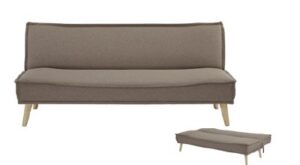 Sofa Beds
Sofa Bed LAB-174N29S-P3
View model →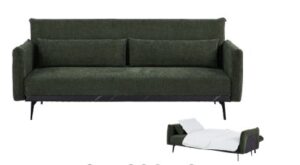 Sofa Beds
Sofa Bed 5LAF-181N32S-P3
View model →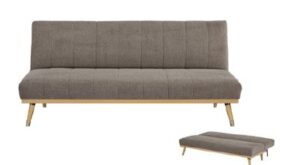 Sofa Beds
Sofa Bed LAB-174N17S-P3
View model →
Browse the full range on the YAJU products page — or request a quotation.