How to Choose Office Chairs for Hotels: A Contract-Furniture Buyer’s Guide
Specifying chairs for a hotel is not the same as buying chairs for a home office. A guestroom chair is used eight to twelve hours a day by a different person every night. A business-centre chair carries a 130 kg guest who leans back hard. A lobby chair is photographed a thousand times a week and judged by guests who never read the spec sheet. Residential chairs fail under these conditions — usually in year two, right when the warranty has expired and the property manager is writing the purchase justification.
This guide is written from the factory side of the table. We manufacture contract seating at our 120,000 m² upholstery facility in Jiashan and supply hotels and office projects across the Middle East, Europe and the US. Below is the specification process we walk through with hotel procurement teams, the certifications that actually matter, and the quantity and timing realities that decide whether your chairs arrive before your soft opening.
Contract-grade vs. residential: what actually differs
The difference is not a marketing label. It shows up in four measurable places:
| Component | Residential chair | Contract chair |
|---|---|---|
| Frame | Plywood or light steel, 2–3 mm wall | Cold-rolled steel tube, 2.5–3.5 mm wall, welded and stress-tested |
| Gas lift | Class 2–3, ~30,000 cycles | Class 4, 100,000+ cycles tested |
| Foam | 25–30 kg/m³ | 32–45 kg/m³ high-resilience moulded foam |
| Mechanism | Basic tilt, plastic arms | Synchronous mechanism, nylon/glass-fibre base, 5-star base rated for dynamic load |
| Warranty | 1–2 years | 3–5 years typical, parts available for 5+ years |
If a quote looks 40 % cheaper than the market, it is almost always because one of these five rows quietly dropped to residential spec. Ask which row. A serious supplier will answer with numbers, not adjectives.
The five certifications and standards to know
1. BIFMA X5.1 — the baseline for office seating
BIFMA X5.1 is the North American test standard for general-purpose office chairs: seat cycle durability, backrest static and cyclic load, tilt testing, castor and base strength. When a US spec says “BIFMA-compliant”, it almost always means X5.1 (with X5.4 for lounge and public-space seating, and X5.5 for desk products). Ask for the test report from an accredited lab — not a certificate image. Reports should name the lab (SGS, TÜV, Intertek, UL and similar), the model number, and the test date.
2. CAL 133 — the one hotels forget until inspection
If the property is in California — or the brand standard applies US-wide — seating in public areas typically needs to meet CAL 133, the flammability test for upholstered furniture used in public occupancy. It is significantly harder to pass than residential standards: the whole chair (frame, foam, barrier, upholstery) is tested as an assembly with a large ignition source. Many factories cannot pass CAL 133 because the barrier interliner and frame design must be engineered for it from the start. If your project touches California, raise CAL 133 before sampling, not after the PO.
3. BS 5852 — the UK and Commonwealth requirement
British Standard 5852 tests upholstery against ignition sources; the “crib 5” (Source 5) level is the usual benchmark for contract seating in UK, Middle East and Commonwealth hospitality projects. A fabric that passes residential standards can fail crib 5. Compliant combinations of frame, foam, interliner and fabric must be tested as a system — swapping the fabric later invalidates the test. Keep this in mind when the interior designer changes the upholstery in month three of the project.
4. CA TB117-2013 — the California upholstery rule
California Technical Bulletin 117-2013 governs smoulder resistance of cover fabrics and barrier materials. It applies to upholstered furniture sold into California. It is less demanding than CAL 133 but is frequently bundled into the same compliance package.
5. BIFMA LEVEL — the sustainability tier
BIFMA LEVEL (based on the e3 standard) certifies a product, facility and organisation across social and environmental criteria. It is increasingly written into corporate and hotel RFPs — particularly for projects pursuing LEED or similar green building credits. It is a multi-point audit, not a paperwork exercise, so verify the certification number on the BIFMA registry rather than trusting a PDF.
How to write a chair specification that factories can actually quote
Most RFQs we receive are missing two or three of the fields below, which forces a second round of emails and costs two weeks. A complete spec gets a firm price within 48 hours:
- Use zone: guestroom, business centre, lobby, restaurant, meeting room, outdoor terrace. This determines which standards apply.
- Quantity by zone: the single biggest price driver, because it decides whether the order fills a container efficiently.
- Task or lounge: task chairs need height adjustment, tilt and often castors; lounge chairs are fixed or swivel.
- Weight rating: specify the tested rating (e.g. 136 kg / 300 lbs standard, 180 kg+ heavy duty).
- Upholstery: fabric brand and pattern, leather grade, or COM/COL (customer’s own material — confirm the yardage minimums and whether fire-testing transfers).
- Finish: powder coat colour, chrome, wood or wood-look veneer, with RAL or manufacturer reference.
- Compliance package: which of the standards above must be met, and whether reports must be issued before shipment.
- Delivery window: the date the chairs must be on site — not the date the PO is signed.
Quantity and lead-time planning
Contract chair orders from direct factories typically start at 50–100 units per model, with mixed colours and fabrics inside one model. Below that, frame set-up, foam moulding and hardware purchasing make the unit price climb steeply — and the order rarely fills even a shared container. A 200-room hotel with guestroom desks plus a business centre usually lands in the 250–500 chair range, which is the sweet spot for container loading.
Plan the calendar like this:
| Stage | Typical duration |
|---|---|
| Quotation and spec confirmation | 3–7 days |
| Sample production and approval | 10–20 days (existing model, your fabric) |
| Production after approval and deposit | 30–45 days |
| Sea freight (Asia to Europe / Middle East / US) | 18–40 days depending on destination |
| Customs and delivery to site | 5–15 days |
Realistic door-to-door: 10–14 weeks from approved spec to site delivery. Add two to three weeks of buffer if the opening date is fixed — peak season (August–October, before the pre-CNY rush) compresses factory slots and freight space at the same time.
Common mistakes we see in hotel chair tenders
- Choosing the photo, not the spec. Lounge chairs photographed in showrooms are frequently residential-grade. Insist on the contract version of the model with its test reports.
- Accepting a compliance “certificate” without a report. Certificates can be issued for a different model, a different fabric, or a different factory. Match model numbers line by line.
- Ignoring castors and glides. Hard-floor guestrooms need specified castors or felt glides; the default hard wheel destroys parquet and generates noise complaints.
- No spare-parts plan. Guestroom chairs break. Ask for the parts list and price list up front — a replacement gas lift three years later should cost tens of dollars, not the price of a new chair.
- Ordering before the FF&E budget is approved. Lead times above assume a signed PO. Changes after production starts mean re-cutting foam and frames at full cost.
How a direct factory changes the equation
Buying through a trading company adds a margin layer and a communication layer between the site and the people who actually cut the foam. Working directly with the factory — in our case across three production bases in Songjiang (panel and desk systems), Jiashan (upholstery and seating) and Nantong (solid wood) — means the person answering your compliance question is the person who built the test sample. It also means customisation is a conversation, not a change order: frame finishes, fabric substitutions, logo embossing and quantity-based tier pricing are all negotiable at volumes above one container.
If you are preparing a hotel or contract seating tender and want a second pair of eyes on the spec — or a firm quotation with compliance documentation — send us the specification and quantities. We return pricing, test reports and a loading plan within two working days.
Next step
Browse our contract office chair range and office furniture systems, or request a quotation with your quantities and compliance requirements. We respond within one business day.
Frequently asked questions
What is the minimum order quantity for contract office chairs?
Typically 50–100 units per model from a direct factory, with mixed colours allowed within the model. Smaller quantities are possible but the unit price rises because of set-up and container economics.
How long does it take to manufacture and deliver hotel chairs?
Plan on 10–14 weeks door-to-door from approved specification: 10–20 days for samples, 30–45 days production, plus sea freight and customs. Add buffer for fixed opening dates.
Which fire standard applies to hotel lobby chairs in California?
Public-area seating in California generally requires CAL 133 compliance, tested as a complete assembly. Guestroom and office seating may fall under CA TB117-2013. Confirm with the local authority having jurisdiction and the brand standard.
Can we supply our own fabric (COM/COL)?
Yes. Confirm the yardage minimum with the fabric mill first, then send a sample for fire testing. The compliance test is valid for the specific fabric–foam–frame combination, so late fabric changes require re-testing.
Do you provide test reports before shipment?
Yes — reports from accredited laboratories are issued with the shipping documents when compliance is specified in the PO. We recommend making this a payment milestone for large orders.
About the author: Shanghai Yaju Furniture Co., Ltd. manufactures contract sofas, sofa beds, office chairs and desk systems across three factories in Shanghai, Jiashan and Nantong, exporting to the US, Europe, the Middle East and Southeast Asia. Contact: David (Client Marketing Manager), David@yajufurniture.com.
From our production floor
Related YAJU products
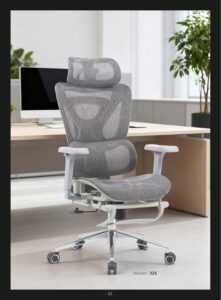 Office Chairs
Office Chair 325
View model →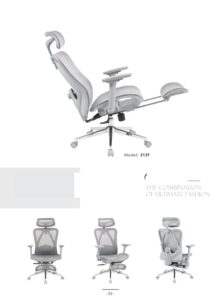 Office Chairs
Office Chair 313T
View model →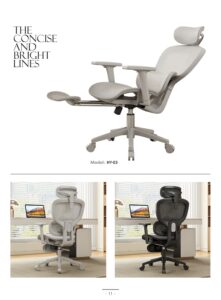 Office Chairs
Office Chair HY-03
View model →
Browse the full range on the YAJU products page — or request a quotation.