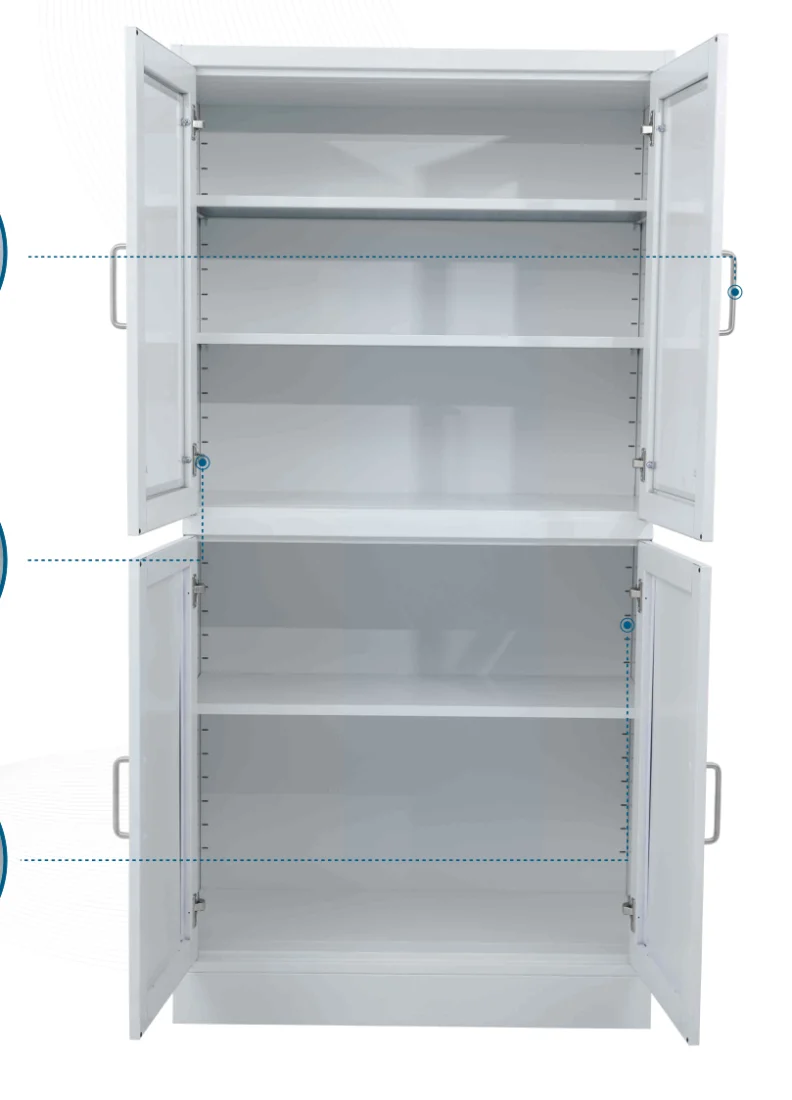
Steel Reagent Cabinet
Powder-coated galvanized-steel cabinet with adjustable shelves for an organised reagent storage layout. Compare glazed and solid-door configurations.
Catalogue cabinet sheet: 1.0 mm galvanized steel; epoxy powder coating.
YAJU Furniture
Compare six laboratory cabinet series in steel, polypropylene and aluminium-frame construction. Start with the contents you need to store, then select the cabinet material, door arrangement and shelf layout for your laboratory.
Powder-coated galvanized-steel cabinet with adjustable shelves for an organised reagent storage layout. Compare glazed and solid-door configurations.
Catalogue cabinet sheet: 1.0 mm galvanized steel; epoxy powder coating.
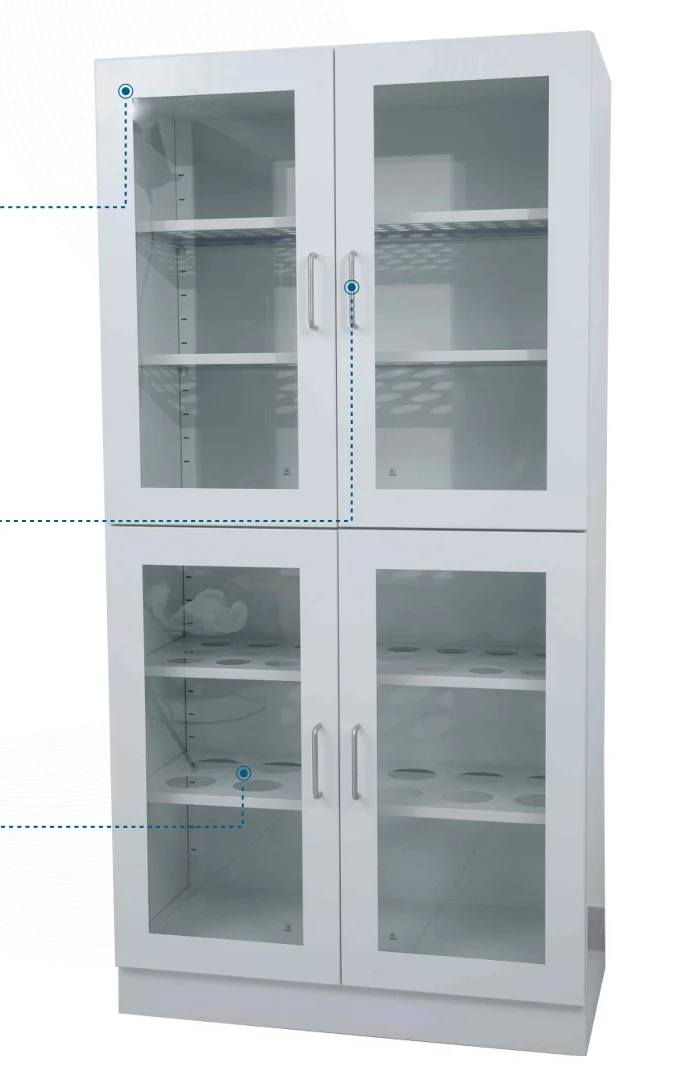
Steel cabinet with perforated shelves for laboratory glassware and a drainage tray. Select shelf openings to suit the vessels in use.
Catalogue cabinet sheet: 1.0 mm galvanized steel; perforated shelves and drainage tray.
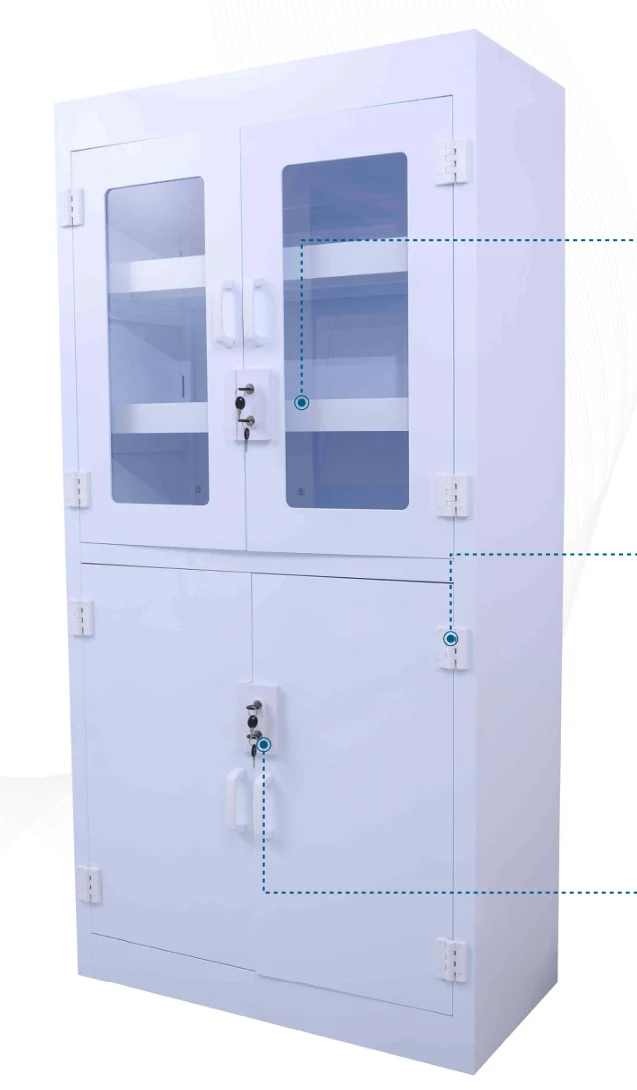
Polypropylene cabinet with adjustable shelves, PP hinges and handles. Confirm compatibility with the substances and cleaning agents used in your laboratory.
Catalogue cabinet sheet: 8 mm PP; adjustable shelves.
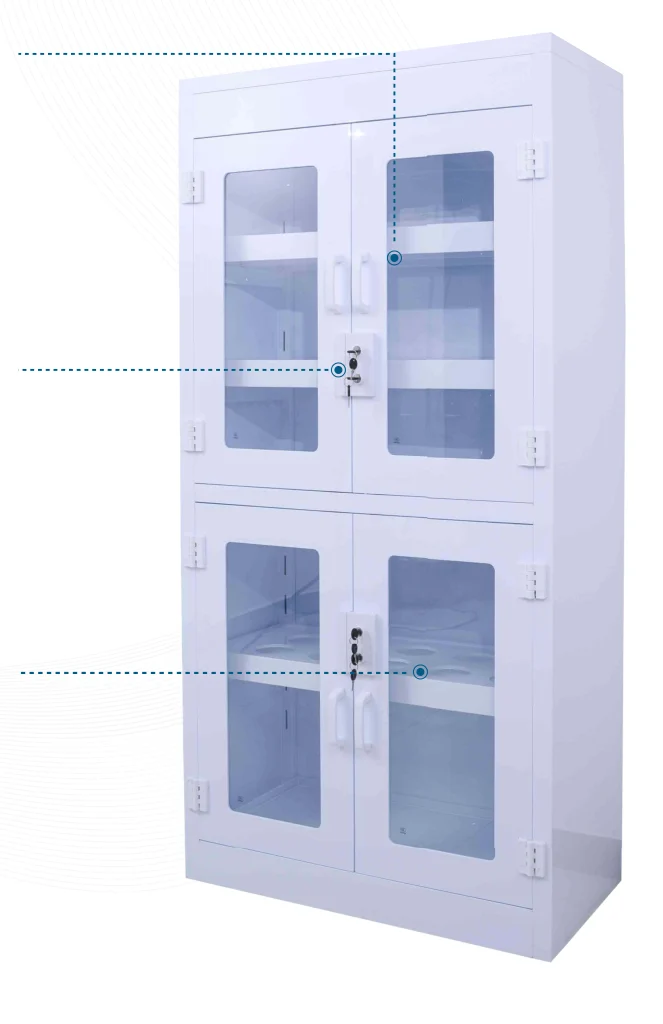
Polypropylene cabinet with perforated shelves for glassware storage. Match the shelf layout and opening sizes to your laboratory vessels.
Catalogue cabinet sheet: 8 mm PP; perforated shelves.
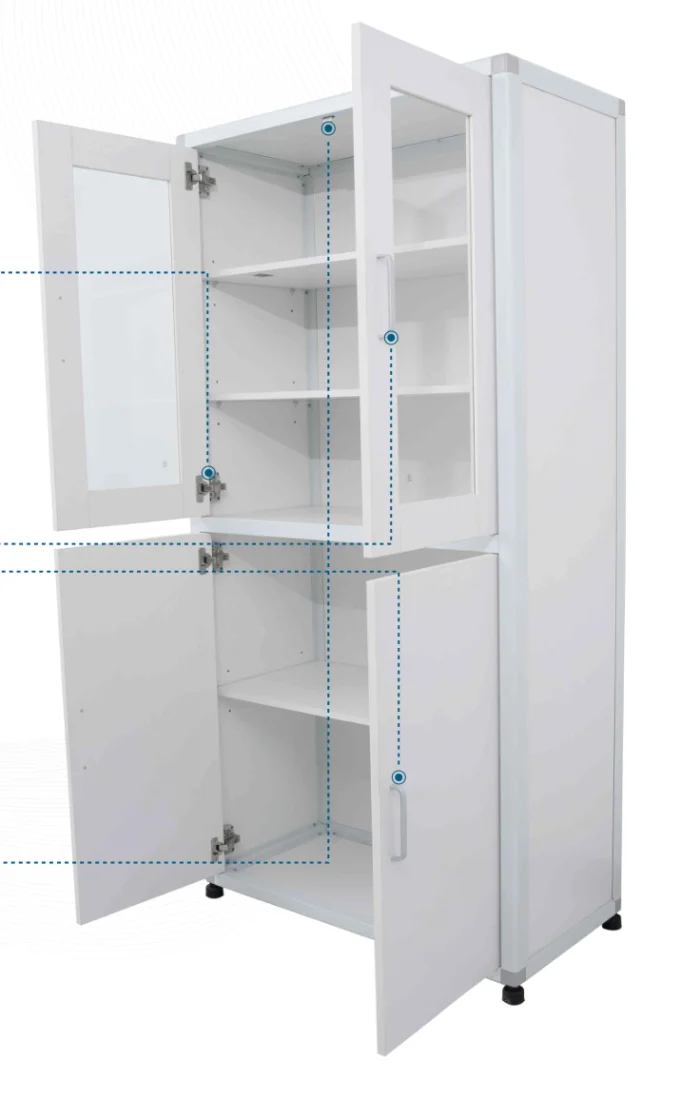
Aluminium-profile frame with panel infill, shelves and adjustable feet. Plan the shelf spacing and door configuration around the stored containers.
Catalogue frame profile: 32 × 32 × 1.6 mm; panel infill.
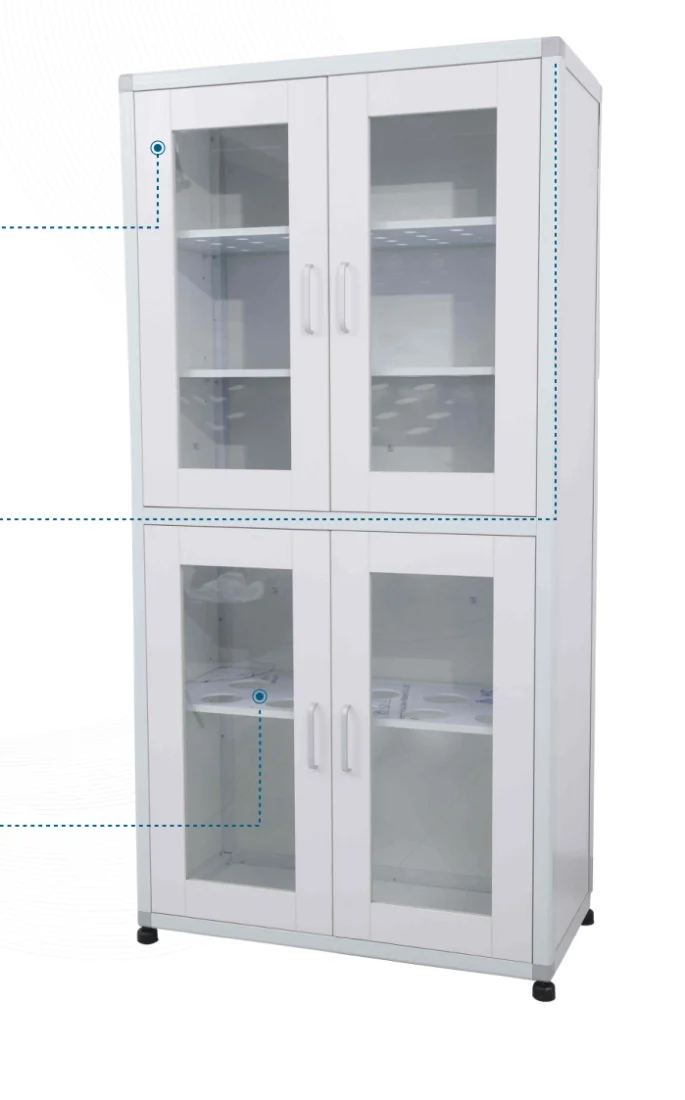
Aluminium-profile frame with panel infill and perforated shelves. Choose this layout when organising laboratory glassware by vessel size.
Catalogue frame profile: 32 × 32 × 1.6 mm; panel infill.
The illustrations show catalogue configurations. Overall dimensions and options are confirmed for the selected configuration. These storage cabinets are not presented as certified fire-resistant, explosion-proof or ventilated chemical safety cabinets. Where such protection is required, specify the applicable requirement before selection.